Key Takeaways
- PCBs are built on a non-conductive substrate (typically fiberglass) with one or more copper layers forming the circuit paths — boards can range from single-sided to 20+ layers.
- Components fall into two primary categories: active (require external power — transistors, ICs, diodes) and passive (no external power needed — resistors, capacitors, inductors).
- Resistors are identified by color bands (through-hole) or 3-4 digit numerical codes (surface-mount); the last digit in SMD codes is typically a multiplier.
- Capacitor polarity markings follow IPC-A-600K standards; small capacitors use a 3-digit code similar to resistor SMD coding.
- Reference designators — R (resistors), C (capacitors), U (ICs), Q (transistors), L (inductors) — link physical components to schematics and Bill of Materials entries.
- A multimeter, component datasheet, and visual inspection are the three core tools for identifying and verifying PCB components.
- OurPCB offers expert PCB assembly services ensuring precise, reliable component placement for every design.
Why Identifying PCB Components Matters
For hobbyists, engineers, and repair technicians alike, the ability to read a circuit board is not optional — it's foundational. Here's why it matters in practice:
- Troubleshooting and repair: You cannot diagnose a fault if you don't know what each part does. Identifying a bulging capacitor or a burnt resistor is step one in any repair workflow.
- Sourcing replacements: Knowing a component's reference designator, package type, and value (e.g., a 10 kΩ 1% resistor in an 0603 package) lets you source an exact replacement from suppliers like Yageo or Murata rather than guessing.
- Reading schematics: Component identification is a direct prerequisite for interpreting circuit diagrams. The symbols on a schematic map directly to the physical parts on the board.
- Safety: Misidentifying a polarized capacitor or a Zener diode and installing it backwards can damage the board or create a hazard. Standards like IPC-A-600K exist precisely to make polarity markings consistent and readable.
- Design upgrades: Understanding what each component does enables informed substitutions — for example, swapping a standard silicon diode for a Schottky diode to reduce forward voltage drop and improve efficiency.
What Is a Printed Circuit Board?
A printed circuit board (PCB) is a flat board made of a non-conductive substrate — most commonly FR4 fiberglass — with one or more thin layers of conductive copper laminated onto its surface. The copper is etched into precise pathways called traces that electrically connect the components mounted on the board.
PCBs can be:
- Single-sided — copper on one side only, used in simple consumer electronics
- Double-sided — copper on both sides, connected through drilled vias
- Multi-layer — up to 20 or more copper layers, used in smartphones, servers, and advanced industrial equipment
Components are attached using two primary technologies: through-hole (leads pass through drilled holes and are soldered on the opposite side) and surface-mount (SMD/SMT) (components sit directly on pads on the board surface). Most modern PCBs use a mix of both.
Special Offer: Get $100 off your order!
Email [email protected] to get started!
Common PCB Components: Quick Reference Table
The table below provides a breakdown of the most common circuit board components, their functions, and how to identify them.
| Component | Image | Function | How to Identify |
|---|---|---|---|
| Resistor | 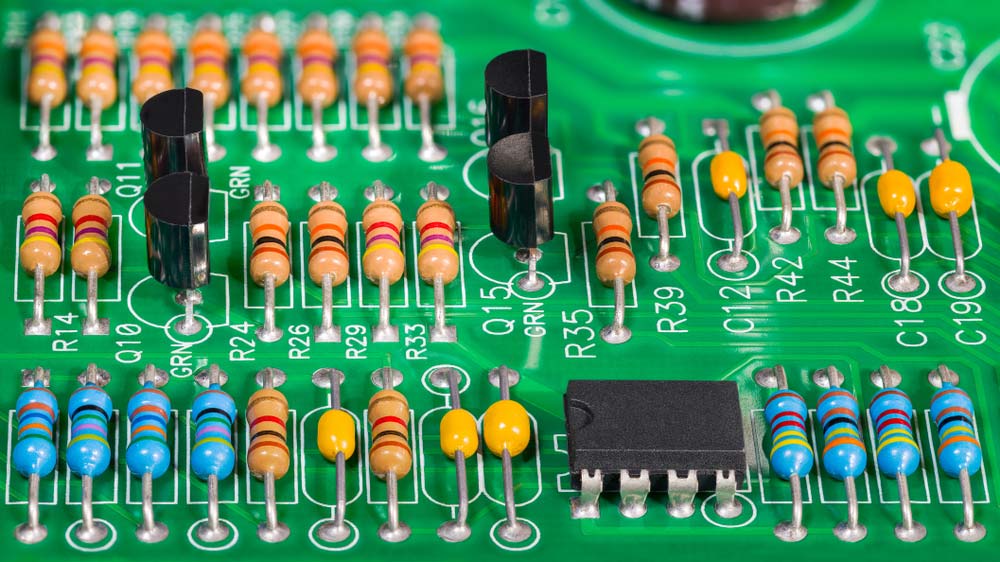 |
Limits current flow; sets voltage levels | Color bands (through-hole); 3-4 digit code (SMD) |
| Capacitor | 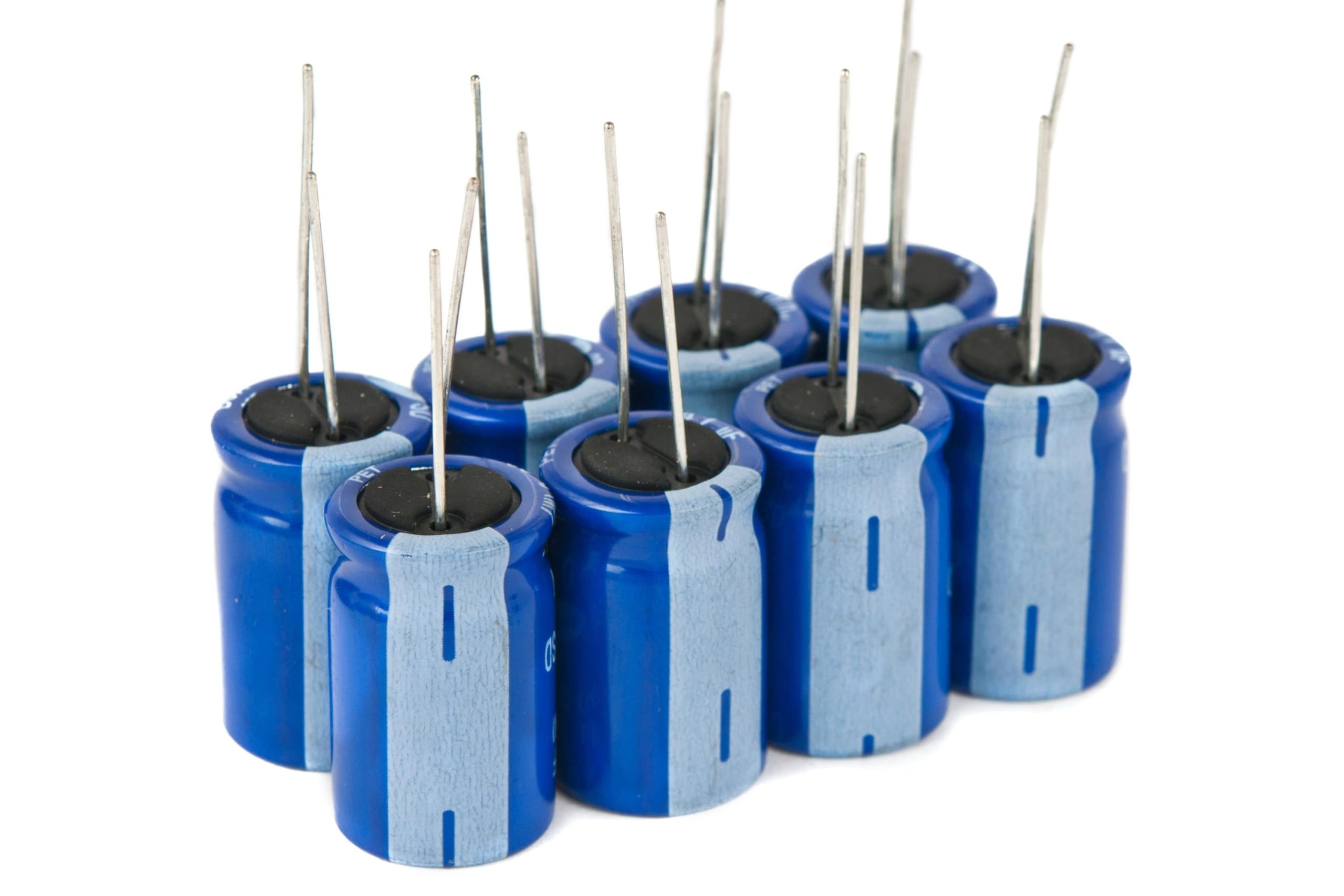 |
Stores and releases electrical charge | Cylindrical (electrolytic) or flat disc (ceramic); µF/pF markings |
| Diode | 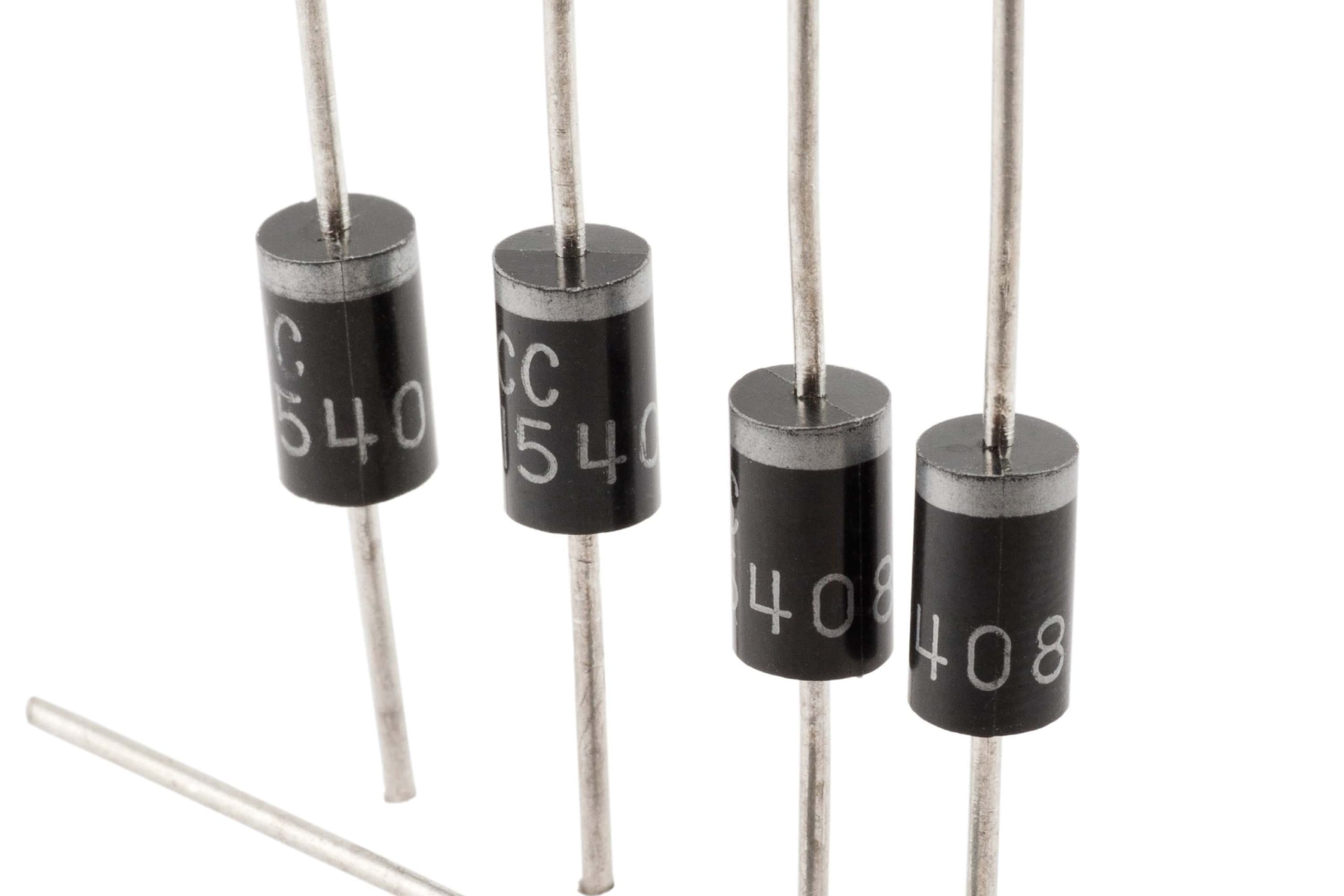 |
Allows current in one direction only | Stripe marks cathode; ~0.7V forward drop (silicon) |
| Transistor | 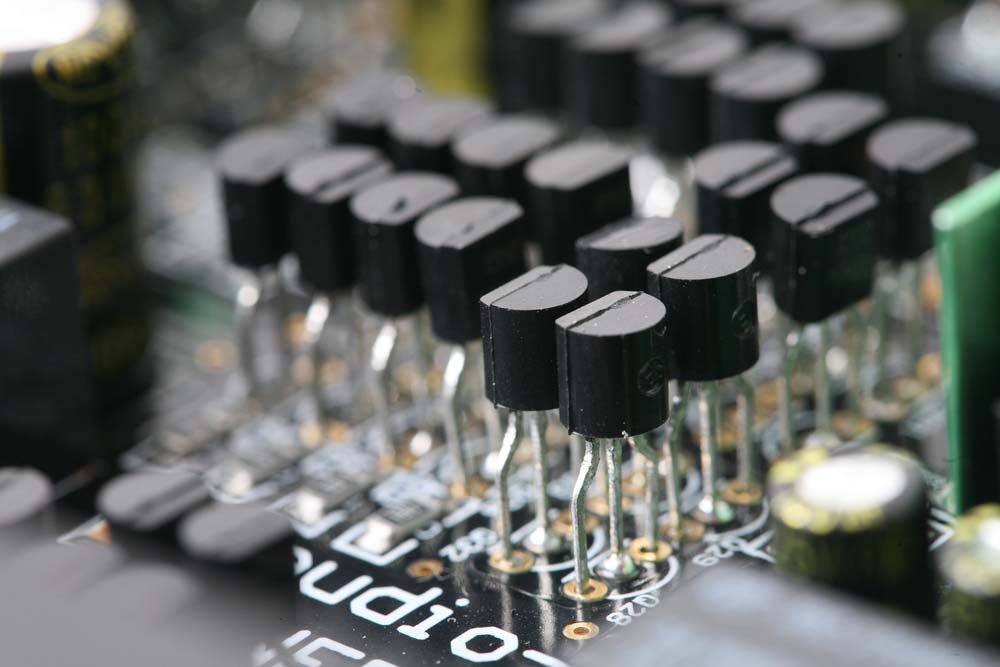 |
Amplifies or switches signals | 3 terminals (BJT: Base, Collector, Emitter); TO-92 package common |
| Integrated Circuit (IC) | 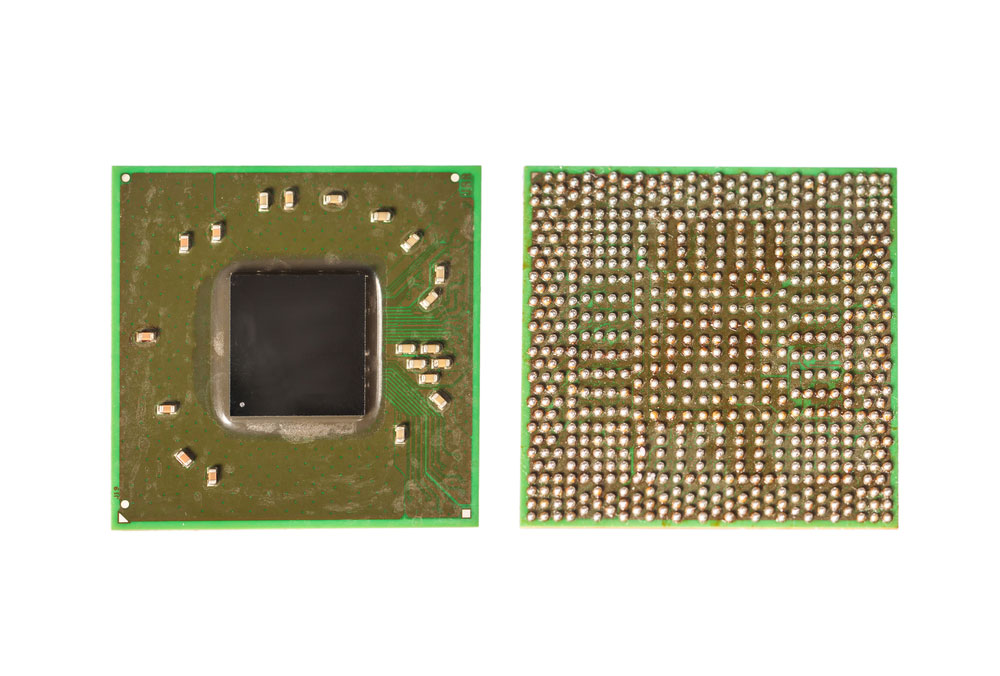 |
Performs complex functions; contains millions of transistors | Flat rectangular chip with multiple pins; labeled U or IC |
| Inductor | 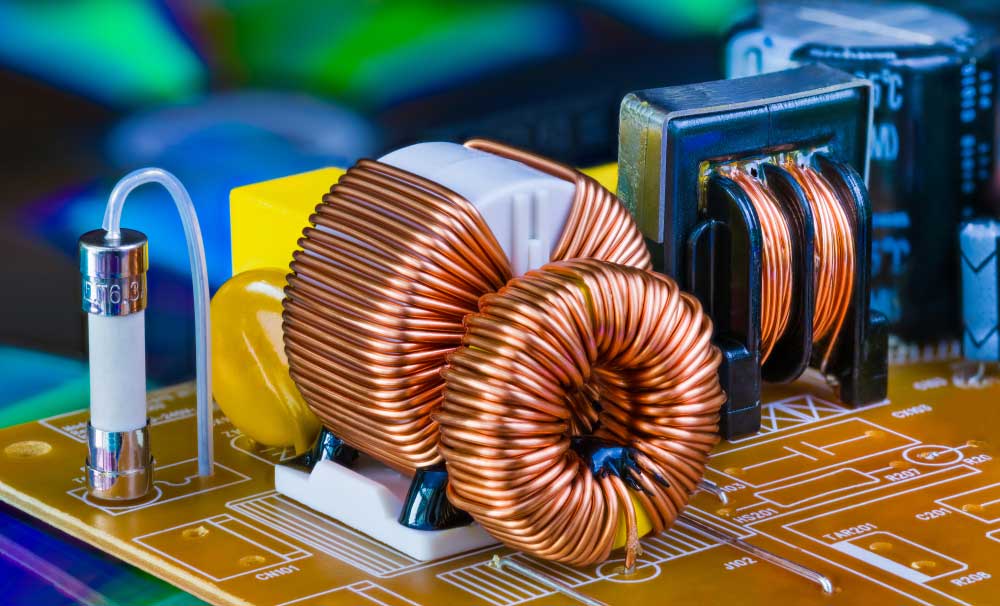 |
Stores energy in a magnetic field | Coiled wire or small block; labeled L |
| Transformer | 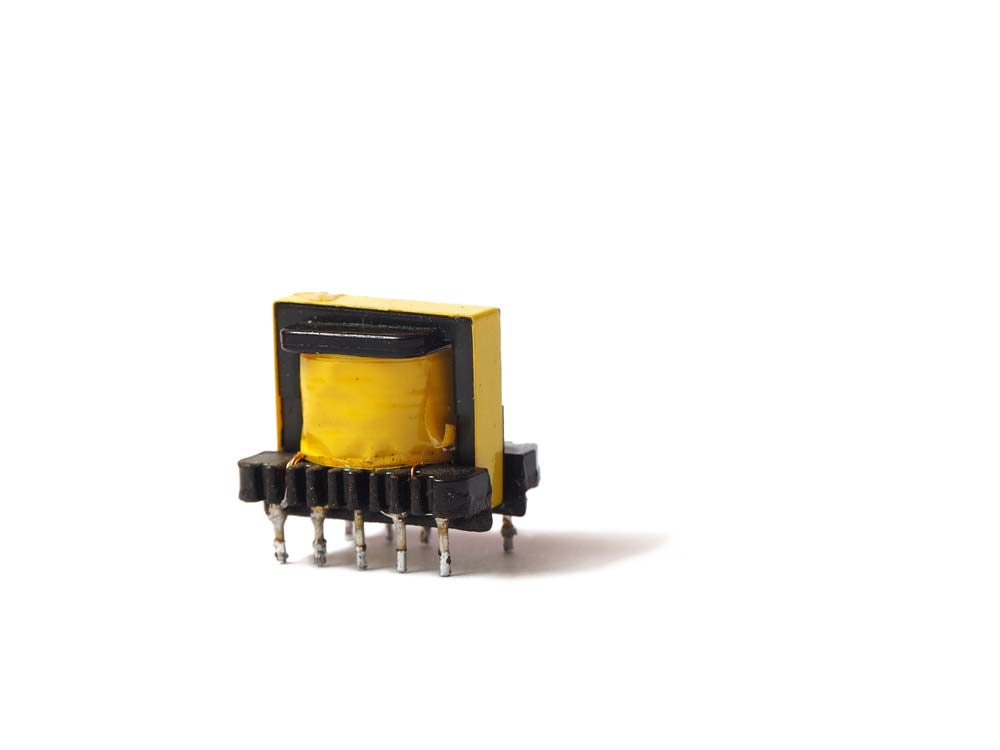 |
Steps voltage up or down via magnetic coupling | Two coil windings; often larger than other components |
| Crystal/Oscillator | 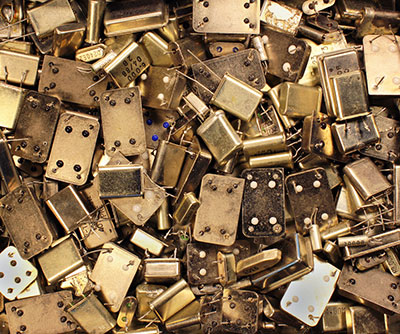 |
Provides precise timing signals | Small metallic can or ceramic package; labeled Y or X |
| LED | 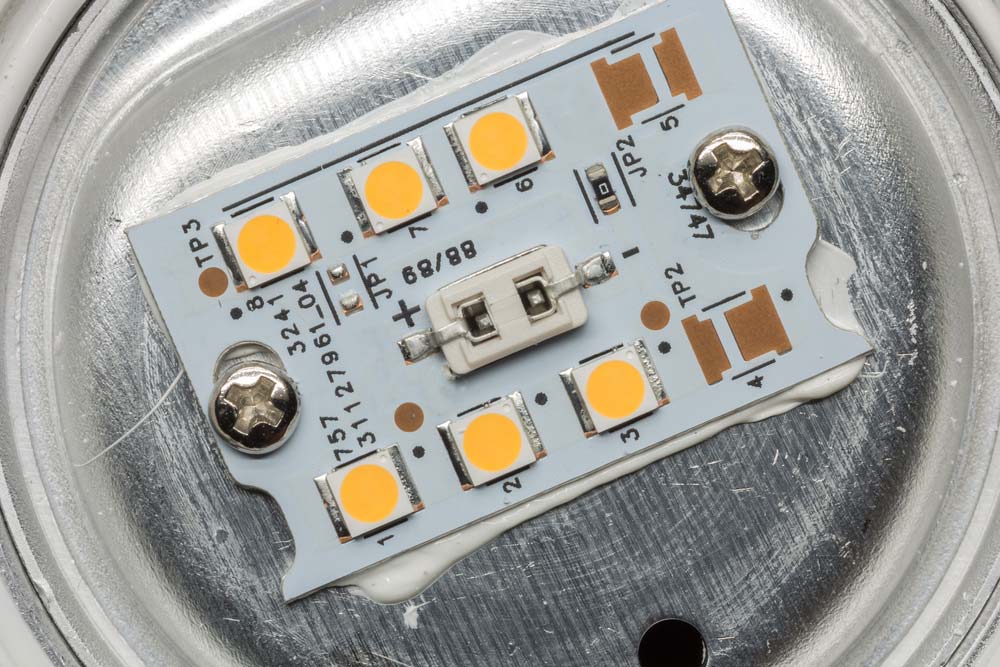 |
Emits light when forward biased | Two leads (anode/cathode); operates at 1.8V-3.3V, 10-30mA |
| Fuse | 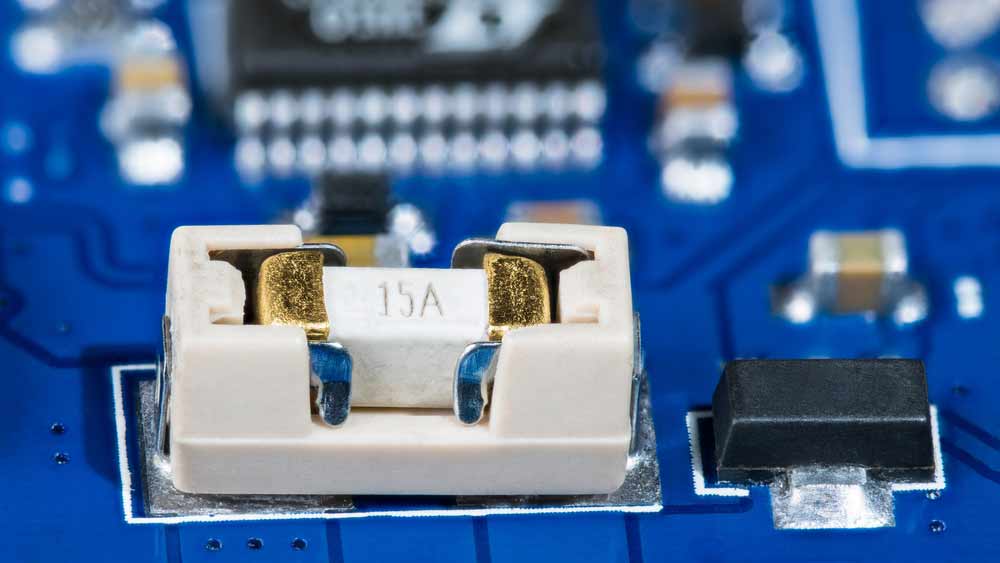 |
Protects circuit from overcurrent | Glass or ceramic tube; rated in amperes |
| Relay | 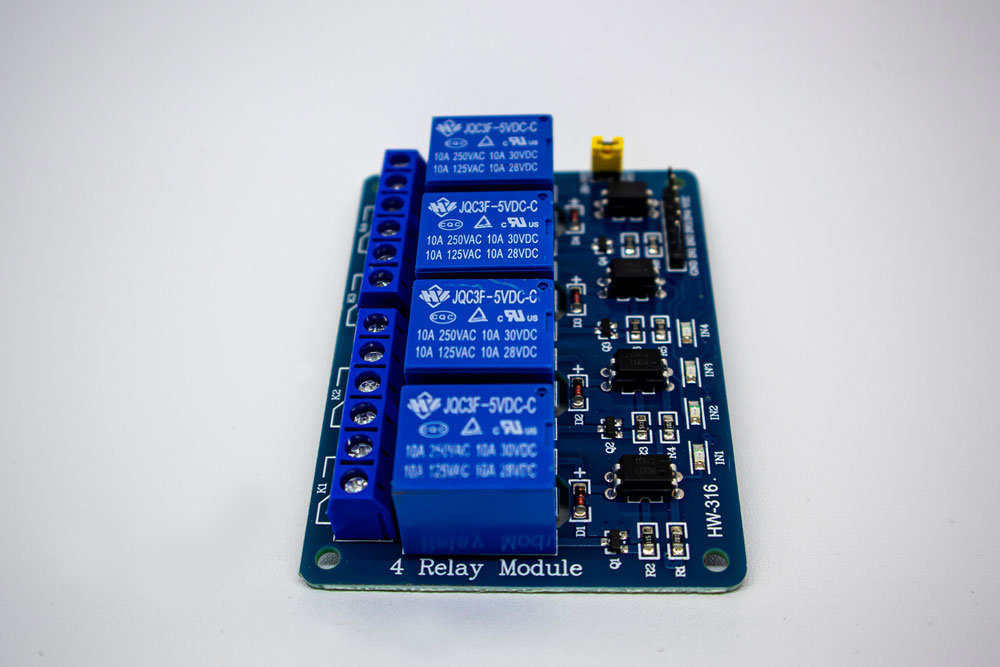 |
Electrically controlled switch | Rectangular block with coil and switch terminals |
| Switch | 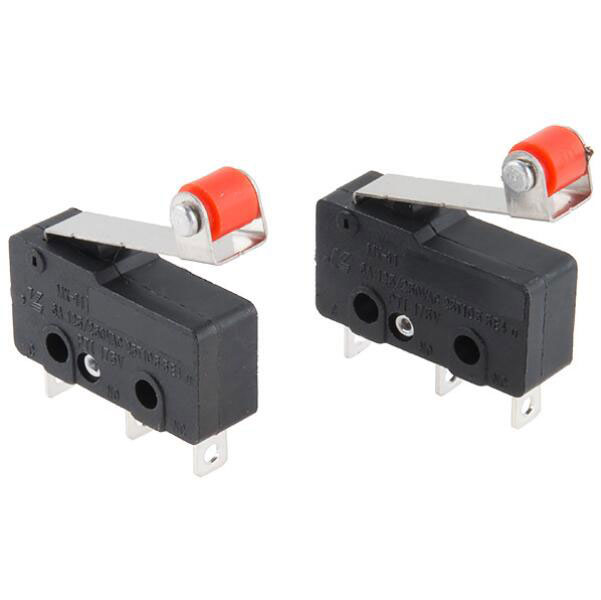 |
Opens or closes a circuit manually | Mechanical actuator; rated for specific voltage/current |
| Potentiometer | 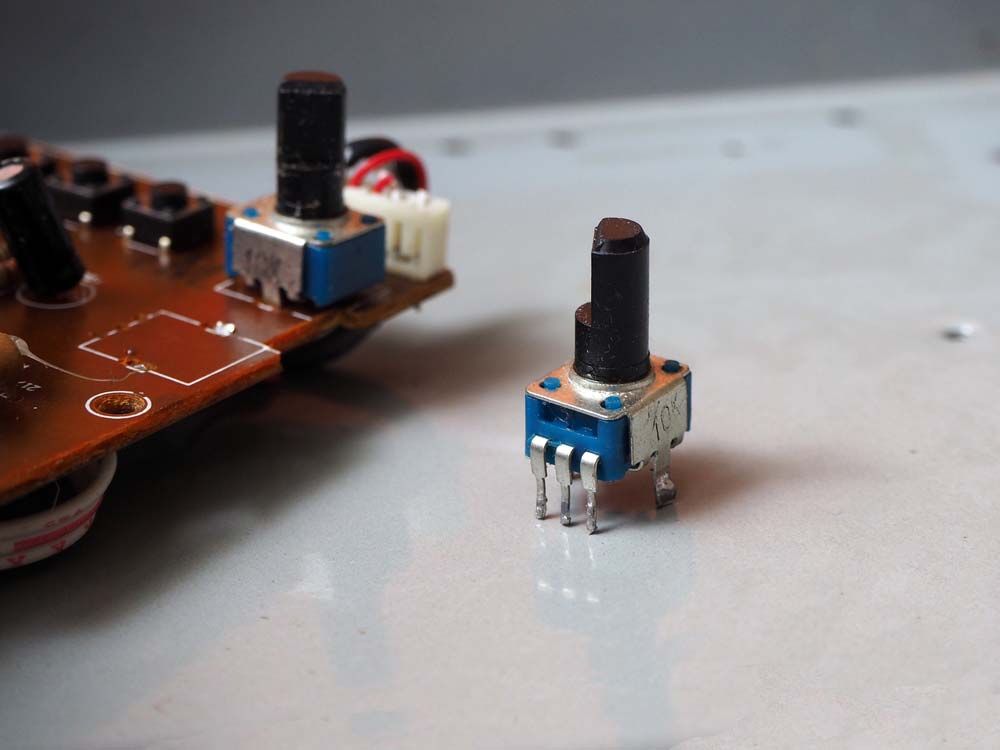 |
Variable resistor for real-time adjustment | Three terminals with rotating or sliding contact |
| Varistor | 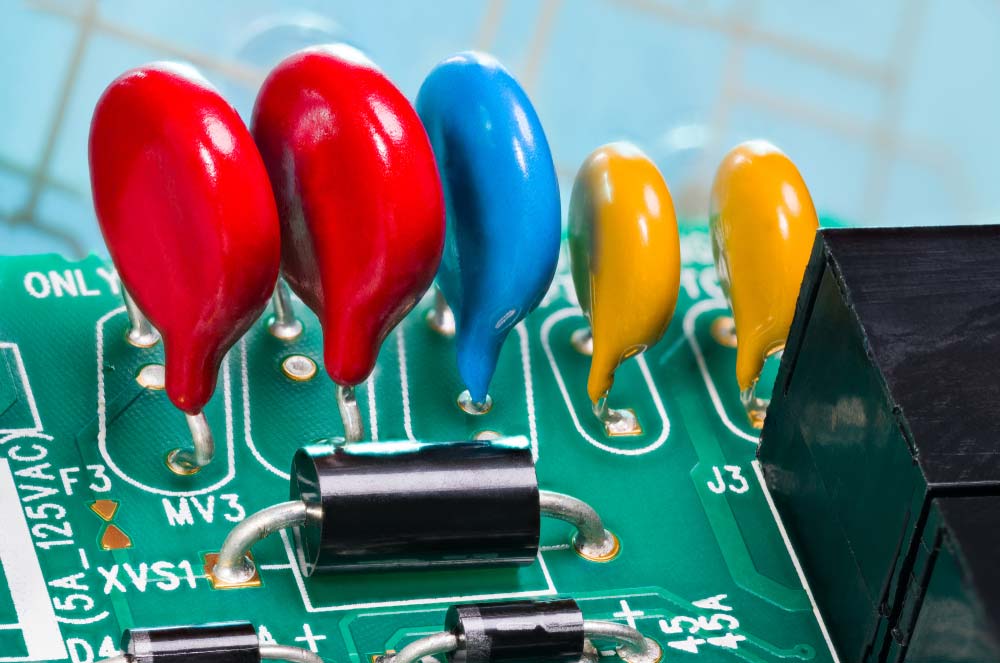 |
Protects against voltage spikes | Disc-shaped; resistance decreases as voltage increases |
| Thermistor | 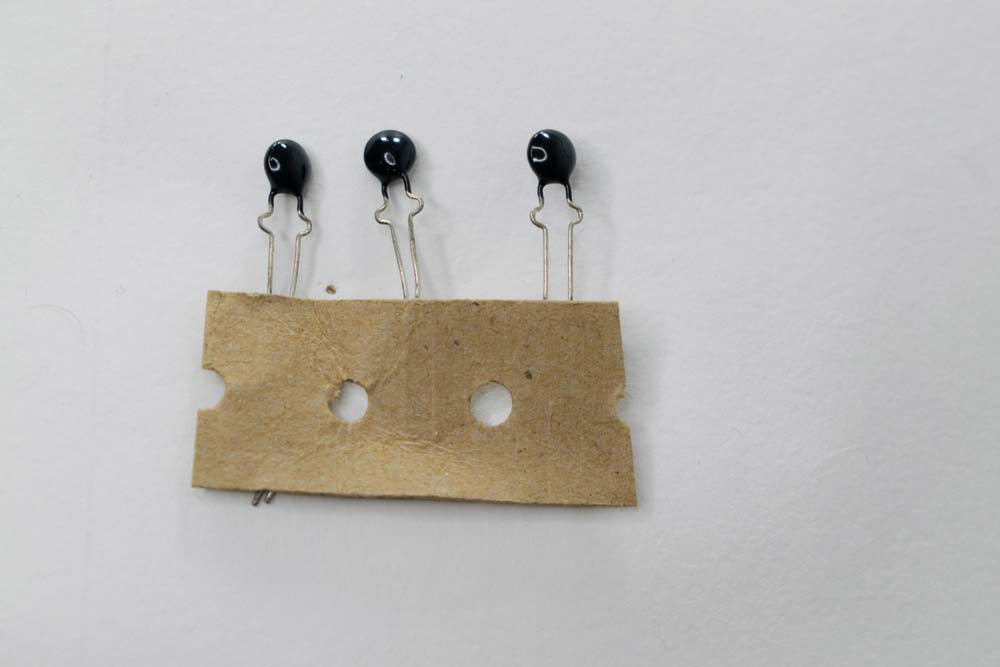 |
Temperature-sensitive resistor | NTC (resistance decreases with heat) or PTC (increases) |
| Sensors | 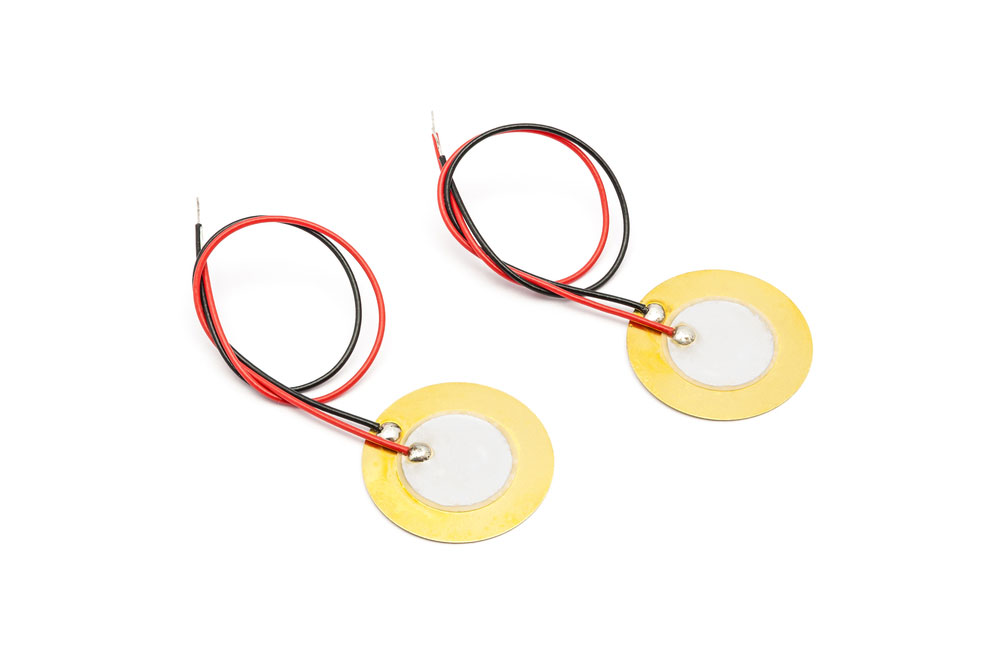 |
Detect physical conditions and convert them to signals | Varies by type; PIR sensors detect motion |
| Silicon Controlled Rectifier | 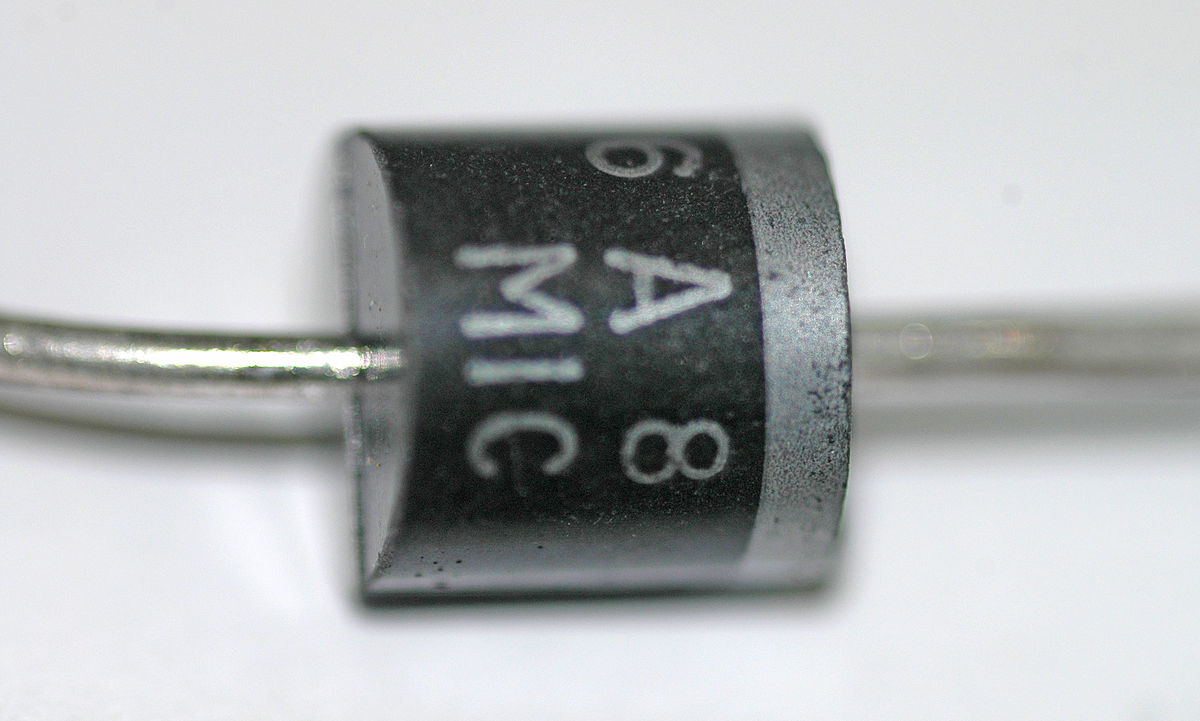 |
Controls large amounts of power with small signal inputs | Semiconductor switch with gate, anode, and cathode |
| Battery | 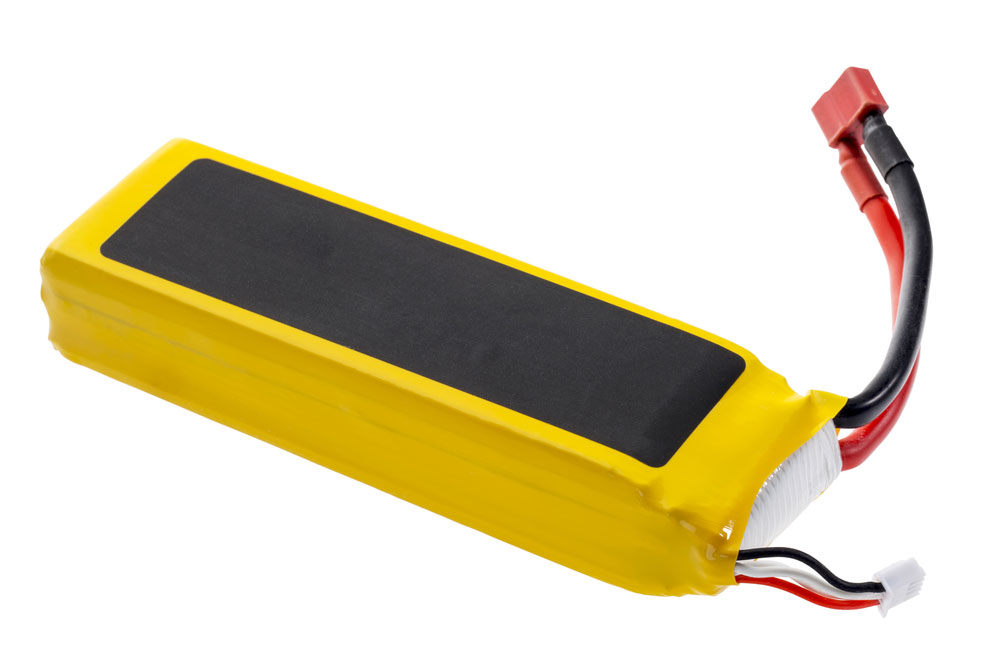 |
Stores energy to power the circuit | Cylindrical or flat cell; marked with voltage rating |
| Connectors | 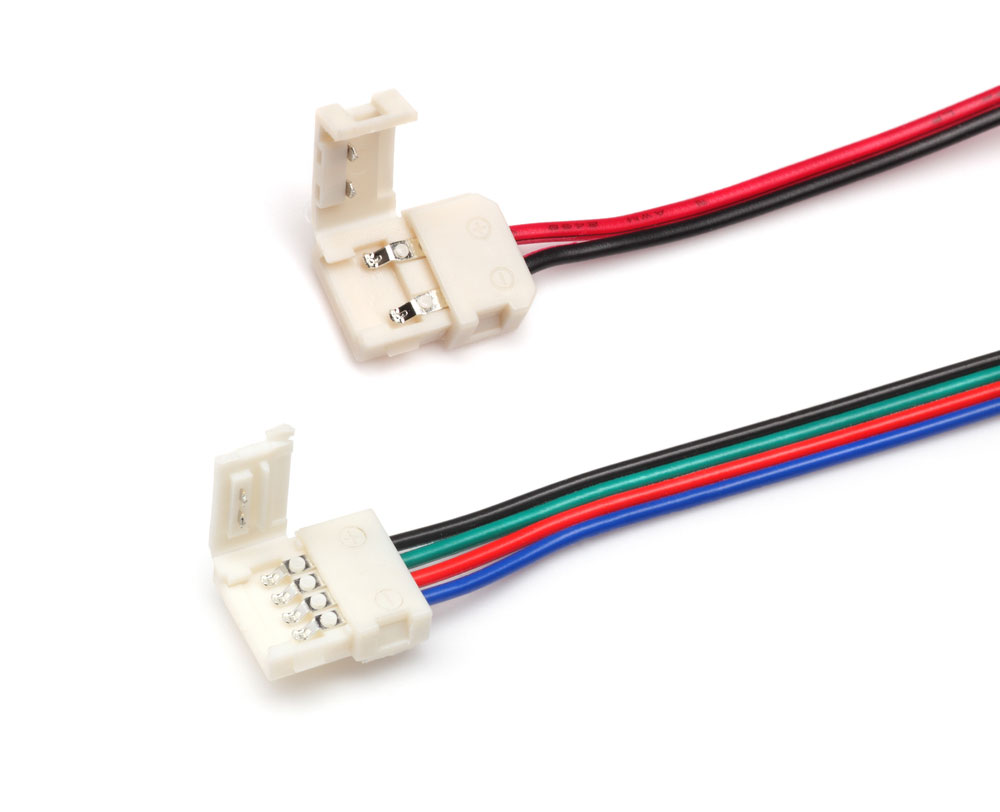 |
Provide electrical connections between components or devices | Pin headers, sockets, edge connectors |
| Voltage Regulators | 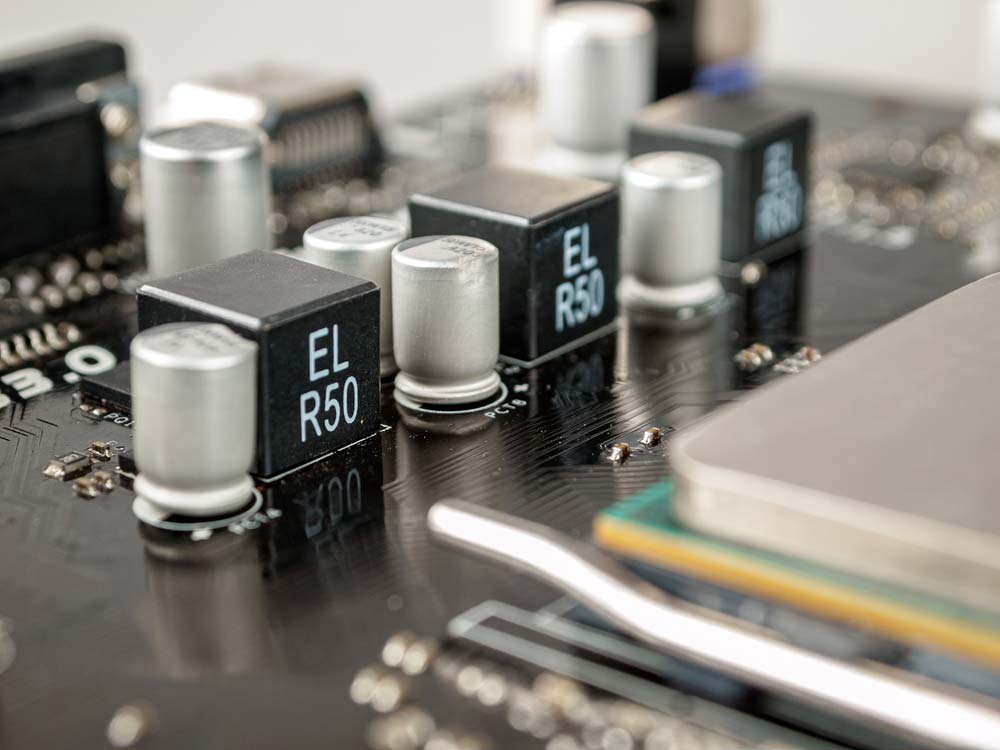 |
Maintain stable output voltage | 3-terminal TO-220 package or SMD; labeled with voltage |
| Optoelectronics | 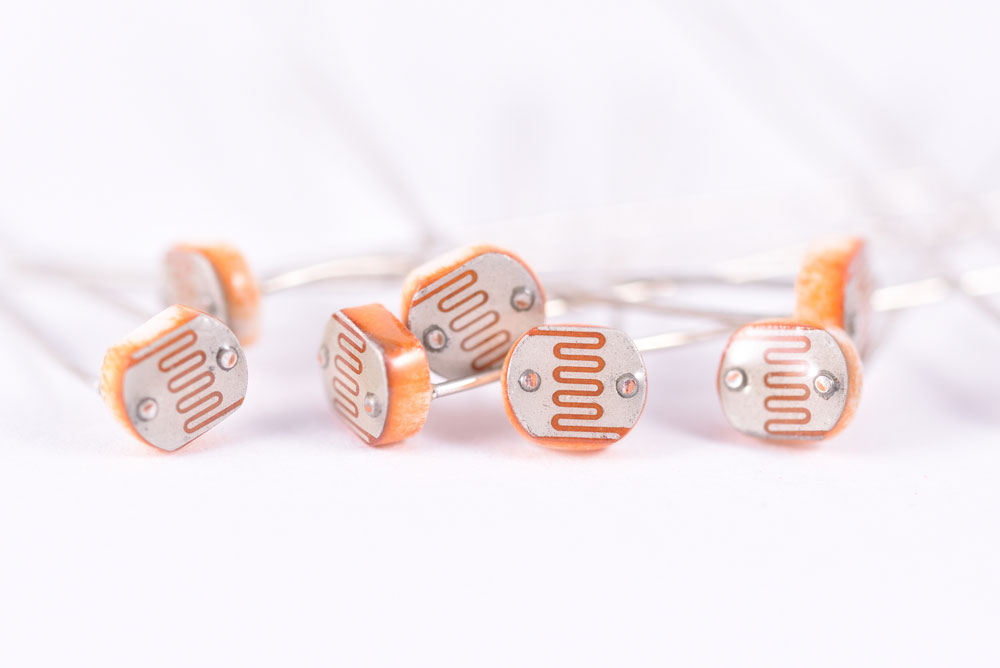 |
Convert between light and electrical signals | LEDs, photoresistors, photodiodes, optocouplers |
| Resistor Networks | 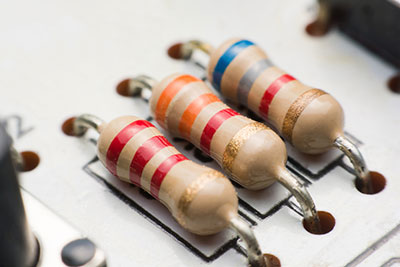 |
Multiple resistors in one package for digital circuits | DIP or SIP package with multiple pins |
| PCB Traces | 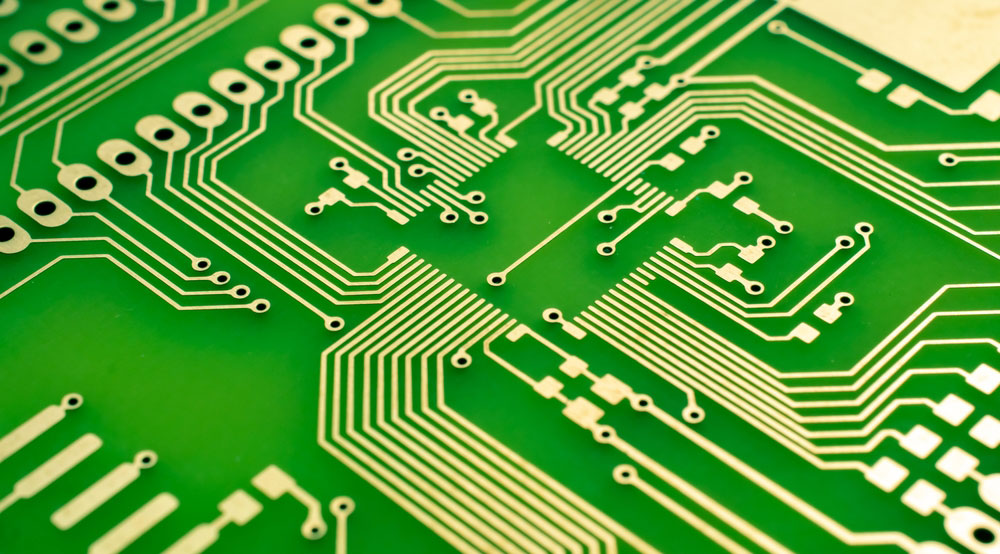 |
Conductive paths transmitting power and signals | Etched copper lines visible on the board surface |
| Solder Mask | 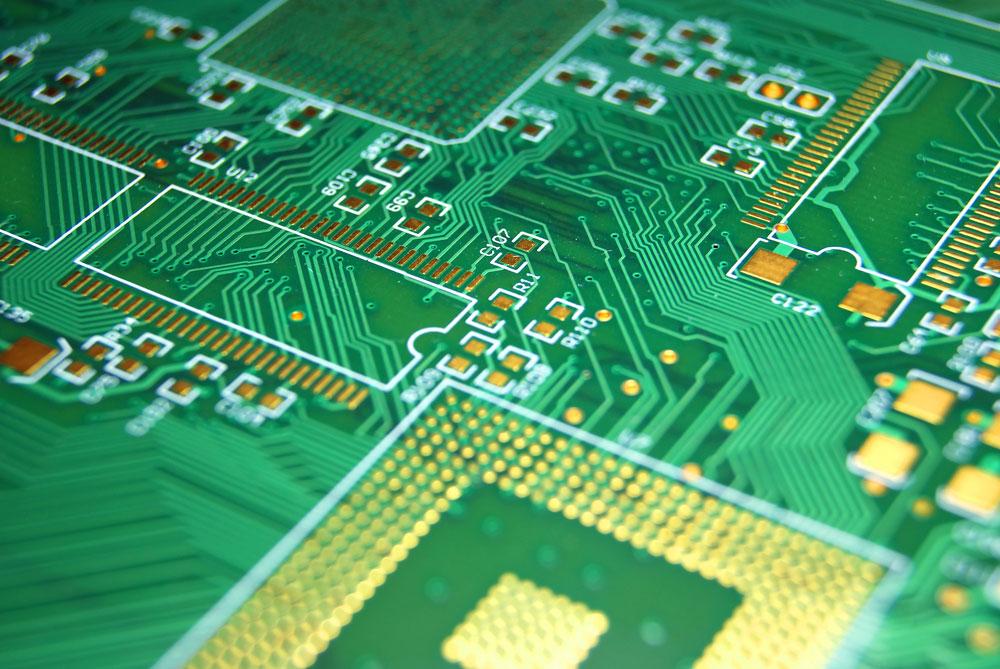 |
Protective layer preventing oxidation and shorts | Green, blue, or red coating covering the PCB surface |
| Copper Layer | 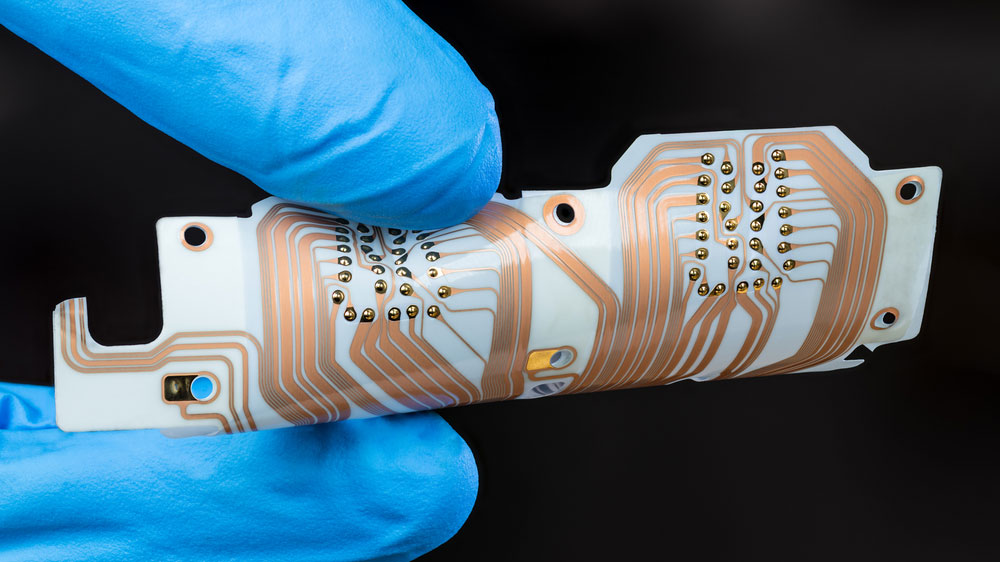 |
Conductive layer forming circuits and connections | Visible on bare PCBs as shiny metallic surface |
| Screen Printing | 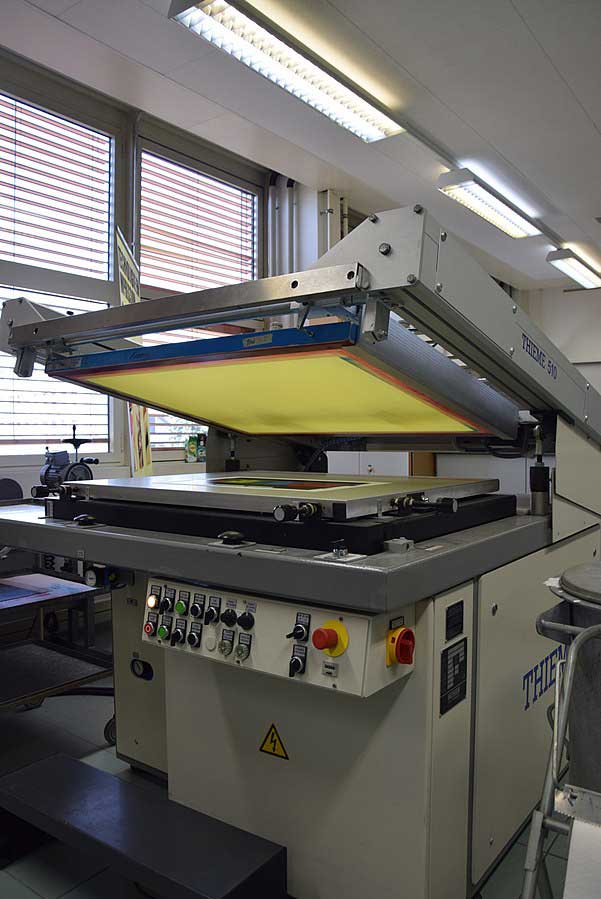 |
Labels components on the PCB surface | White text and symbols printed on the board |
What Are the Different Types of Components?
Electrical electronic components can be divided into two main categories: active and passive components.
Active Components
Active components require an external power source to operate. They can amplify signals, switch current, and process data — functions that passive components cannot perform on their own.
Transistors
Transistors are semiconductor devices with three terminals that either amplify signals or act as electronic switches. They are the fundamental building block of modern electronics — a single integrated circuit can contain millions to billions of transistors depending on its complexity.
Bipolar Junction Transistors (BJTs) come in two configurations:
- NPN — more common; current flows from collector to emitter when base is energized
- PNP — current flows from emitter to collector; used in complementary circuit designs
BJT terminals: Base (B), Collector (C), Emitter (E). The TO-92 package is one of the most recognizable through-hole transistor packages — a small D-shaped plastic body with three leads.
Field-Effect Transistors (FETs) control current using an electric field rather than a base current:
- MOSFETs (Metal-Oxide-Semiconductor FETs) are the dominant type in modern circuits, valued for their high efficiency and low power consumption
- MOSFET terminals: Gate (G), Drain (D), Source (S)
- JFETs (Junction FETs) are used in lower-power analog applications
Transistors appear in hearing aids, computer memory, motor drivers, and virtually every digital device.
Integrated Circuits (ICs)
Integrated circuits pack entire functional circuits onto a single semiconductor chip. A modern microcontroller like the ST STM32G0B1KET6 (LQFP-64 package, 10x10 mm footprint) contains a 32-bit processor, memory, and peripherals all in one component. ICs are labeled on PCBs with the designator U or IC.
Types of ICs:
- Analog ICs — process continuous signals; used in audio amplification and RF applications
- Digital ICs — process binary (0/1) signals; used in microprocessors, memory, and logic circuits
- Mixed-Signal ICs — combine analog and digital functions on one chip; common in sensor interfaces and communication modules
Active Diodes
Active diodes — also called synchronous rectifiers — use transistors or MOSFETs to improve rectification performance over passive diodes. They require an external power source and offer lower forward voltage drop and higher efficiency, making them valuable in power-sensitive designs.
Key types:
- LEDs (Light-Emitting Diodes): Emit light when forward biased; typically operate at 1.8V-3.3V and 10mA-30mA. Used for indicators, displays, and lighting.
- Zener Diodes: Allow reverse current flow at a specific breakdown voltage; used for voltage regulation.
- Schottky Diodes: Low forward voltage drop (~0.3V vs. ~0.7V for silicon); fast switching; ideal for power supplies and RF circuits.
Vacuum Tubes
Vacuum tubes control electric current flow in a high vacuum between electrodes. Once the dominant amplification technology in radios and televisions, they have largely been replaced by transistors and ICs. However, they remain in use in high-end audio amplifiers, certain RF transmitters, and specialized scientific equipment.
Types: Triodes (3 electrodes), Tetrodes (4 electrodes), Pentodes (5 electrodes — improved amplification characteristics).
Voltage Regulators
Voltage regulators maintain a stable output voltage regardless of input fluctuations or load changes. Types include linear, switching, LDO (low-dropout), buck (step-down), boost (step-up), and charge pump regulators — each suited to different efficiency and power requirements.
Optoelectronics
Optoelectronic devices convert between light and electrical signals. This category includes LEDs, photoresistors (LDRs), photodiodes, and optocouplers. Optocouplers are particularly important in PCB design for providing electrical isolation between high-voltage and low-voltage circuit sections.
Passive Components
Passive components do not require an external power source and cannot amplify signals. Instead, they store, dissipate, or redirect energy — shaping and stabilizing the signals that active components generate. Every PCB, regardless of complexity, relies on passive components for filtering, protection, and power management.
Resistors
Resistors limit or control the flow of electrical current, functioning like a restriction in a pipe. They set voltage levels, protect sensitive components from excess current, and form voltage dividers.
Identification:
- Through-hole resistors use a color band system (3-6 bands) to encode resistance value and tolerance. IEC standards govern these color codes across all manufacturers, making them universally readable. Online calculators can decode color bands instantly.
- Surface-mount resistors use a 3 or 4-digit numerical code where the last digit is a multiplier. For example, "103" = 10 x 10³ = 10,000Ω (10 kΩ). A real-world example: the Yageo RC0603FR-0710KL is a 10 kΩ, 1% tolerance resistor in an 0603 SMD package.
Types:
- Fixed resistors — set resistance value; most common type
- Variable resistors (rheostats/potentiometers) — adjustable; used for volume controls and sensor calibration
- Resistor networks — multiple resistors in one package; common in digital circuits for bus termination
Capacitors
Capacitors store electrical charge on two conductive plates separated by an insulating material called a dielectric. They filter noise, smooth voltage ripple, block DC while passing AC, and create timing circuits.
Identification:
- Larger capacitors (electrolytic) are labeled directly in µF (microfarads) with a voltage rating (e.g., 1 µF 25V — like the Murata GRM188R71E105KA12 in an 0603 package)
- Smaller capacitors use a 3-digit code (identical logic to SMD resistors): "105" = 10 x 10⁵ pF = 1 µF
- Polarity markings on electrolytic capacitors follow IPC-A-600K standards — the negative lead is typically marked with a stripe
Types and use cases:
| Type | Characteristics | Best Used For |
|---|---|---|
| Ceramic (X7R, C0G) | Small, stable, non-polarized | Decoupling, high-frequency filtering |
| Electrolytic | Large capacitance, polarized | Power supply filtering, bulk storage |
| Tantalum | Compact, stable, polarized | Reliable bypass in space-constrained designs |
| Film | Low loss, non-polarized, precise | Audio circuits, precision timing |
Inductors
Inductors store energy in a magnetic field when current flows through them. They resist changes in current — a property governed by Lenz's Law — making them essential for filtering, energy storage in switching power supplies, and RF tuning circuits.
Types:
- Fixed inductors — set inductance value; used in power filters and chokes
- Variable inductors — adjustable inductance; used in RF tuning circuits
Inductors are labeled with the designator L on PCBs and are often identified by their coil structure or a small rectangular ferrite-core block in SMD form.
Diodes
Diodes are semiconductor devices that allow current to flow in one direction only, functioning as electronic one-way valves. They are fundamental to power conversion, signal processing, and circuit protection.
How to identify a diode:
- Through-hole diodes have a stripe (band) marking the cathode — the end that blocks forward current
- SMD diodes use a line or triangle symbol on their body
- Silicon diodes have a characteristic forward voltage drop of approximately 0.7V; Schottky diodes drop only ~0.3V
Key diode types:
| Type | Key Characteristic | Common Application |
|---|---|---|
| Standard Rectifier | ~0.7V forward drop | AC-to-DC conversion |
| Zener | Conducts in reverse at breakdown voltage | Voltage regulation |
| Schottky | ~0.3V forward drop; fast switching | Power supplies, RF circuits |
| LED | Emits light when forward biased | Indicators, displays, lighting |
| Photodiode | Converts light into electrical current | Solar cells, optical communication |
Relays
Relays are electrically operated switches that can control a high-current or high-voltage circuit with small control signals. They are used in industrial control systems, automotive applications, and many other areas where electrical isolation or high-power switching is needed.
Types of Relays
- Electromechanical relays use moving parts to open or close the circuit.
- Solid-state relays use electronic components without moving parts, offering faster switching and longer life.
Circuit Breakers
Circuit breakers protect circuits from damage caused by overcurrent or short circuits. They automatically interrupt the flow of current when it exceeds a safe level.
Types of Circuit Breakers
- Miniature circuit breakers (MCB) protect against overload and short circuits in small-scale applications.
- Molded case circuit breakers (MCCB) protect larger-scale industrial applications.
Fuses
Fuses are sacrificial devices that protect circuits by melting when the current exceeds a safe level. They're designed to be replaced once they've blown. Fuses are used in electronics, automotive circuits, and household appliances for overcurrent protection. For more on protecting your circuits, consider understanding fast-blow fuses, which offer rapid protection in high-current scenarios.
Types of Fuses
- Cartridge fuses are cylindrical in shape and used in various applications.
- Blade fuses are commonly used in automobiles.
- Resettable fuses automatically reset after the fault is cleared.
Switches
Switches are used to open or close electrical circuits, controlling the flow of current.
Types of Switches
- Toggle switches are operated by a lever.
- Push button switches are activated by pressing a button.
- Rotary switches are operated by rotating a knob.
Common Issues with Circuit Board Components
Circuit board components can encounter a variety of issues, often leading to device malfunction. Understanding these common problems can help you troubleshoot and resolve issues more effectively.
Identifying Faulty Components
Faulty components are a primary cause of circuit board failures. Common signs of component failure include:
- Burn Marks: Indicate overheating or a short circuit. Components like resistors and ICs may show visible signs of damage.
- Bulging or Leaking Capacitors: Electrolytic capacitors may bulge or leak electrolyte when they fail, often due to excessive heat or age.
- Cracked or Broken Components: Physical damage, such as cracks in resistors or transistors, can render components non-functional.
Heat-related failures are particularly common in high-power circuits, making effective PCB thermal management essential for preventing component damage and ensuring long-term reliability.
Troubleshooting Techniques
Effective troubleshooting requires a systematic approach to diagnosing issues:
- Visual Inspection: Start by visually inspecting the circuit board for obvious signs of damage, such as burn marks, corrosion, or loose connections.
- Component Testing: Use a multimeter to test individual components, comparing readings to expected values.
- Circuit Tracing: Follow the circuit paths to identify potential issues with connections or component interactions. Use the circuit diagram for reference.
Replacement and Repair Tips
When a component is identified as faulty, replacement or repair may be necessary:
- Component Sourcing: Ensure you source the correct replacement components, matching specifications like resistance, capacitance, and voltage ratings.
- Safe Removal: Use appropriate tools, such as a soldering iron and desoldering pump, to safely remove faulty components without damaging the board.
- Proper Installation: When installing new components, ensure correct orientation and secure soldering to maintain reliable connections.
OurPCB: Experienced PCB Assembly Services
Understanding printed circuit board components is essential for anyone working in circuit design, from beginners to experienced engineers. Each part, from small components that regulate current to elements that store energy in a magnetic field, plays an important role in creating reliable, efficient PCBs.
At OurPCB, we bring years of experience to PCB assembly, ensuring that every component in your design is perfectly placed to achieve the best performance. Whether you're following our beginner's guide or developing a complicated project, OurPCB's team is here to bring your ideas to life with precision and quality. Ready to take your PCB from design to reality? Contact OurPCB today to get started with expert circuit board assembly services you can trust.
Essential PCB Components: A Comprehensive Guide FAQs
How do you place PCB Components?
In PCB design, components are placed according to the pcb layout, optimizing space and signal paths. Proper placement of passive components and active elements is important for the assembly process to ensure efficient electronic circuit performance.
How are components connected in a PCB?
Components in PCBs are connected by copper traces that route electronic signals through the board. These connections can use through-hole PCB components or surface mount technology, depending on the design and pcb manufacturing requirements.
What are PCB boards used for?
PCB boards are used to support and connect components in modern electronic devices, allowing circuits to function as intended. They organize and manage complex electronic signals across various systems for different printed circuit board applications, from computers to appliances.
What are printed circuit board made of?
Printed circuit boards are typically made of layers of fiberglass, copper, and epoxy, providing insulation and conduction for electronic circuits. The combination of these materials supports durability and efficient signal transmission in pcb manufacturing.
How are PCB Components Identified?
Basic PCB components are identified by markings and labels in the pcb layout, often categorized as passive components, active components, or connectors. These labels assist in the assembly process by indicating exact placement and function in the electronic circuit.
Back to Top: PCB Components | List, Identification, and Functions Explained
Special Offer: Get $100 off your order!
Email [email protected] to get started!